- Home
- In the Classroom
- Early Years
Early Years
Our EYFS Vision
At Oxclose Primary Academy, we are passionate about creating a safe, nurturing and inclusive environment where every child is valued as a unique individual. In our Reception class, we prioritise strong relationships, emotional security and a sense of belonging, enabling children to feel confident, happy and ready to learn.
We are committed to providing rich, meaningful opportunities that support children to grow and succeed across all areas of development. Through a carefully planned and stimulating environment, we encourage children to develop independence, resilience and confidence. We empower our children to take risks, challenge themselves and become active, motivated learners.
We recognise that the Early Years Foundation Stage (EYFS) is crucial in establishing the secure foundations upon which all future learning is built.
Our curriculum follows the EYFS Framework, encompassing seven key areas of learning:
Prime Areas
- Personal, Social and Emotional Development
- Communication and Language
- Physical Development
Specific Areas
- Literacy
- Mathematics
- Understanding the World
- Expressive Arts and Design
Our approach ensures a balance of adult-led teaching and child-initiated learning, where play is at the heart of everything we do. Through high-quality interactions, skilled modelling and purposeful provision, we support children in becoming confident communicators and curious thinkers.
In mathematics, we follow the White Rose Maths scheme, which provides a clear, progressive structure to develop children’s understanding of key concepts. Through practical, hands-on experiences and the use of concrete resources, children build strong foundations in number, problem-solving and mathematical reasoning.
In literacy, we use The Literacy Tree as a foundation for our planning, immersing children in high-quality texts and storytelling. Our carefully sequenced approach supports the development of vocabulary, comprehension and early writing skills, fostering a lifelong love of reading.
Early reading is further supported through the Essential Letters and Sounds (ELS) phonics programme, which provides a structured and systematic approach to phonics. This ensures that children develop secure phonetic knowledge and decoding skills, enabling them to become confident and fluent readers.
At Oxclose Primary Academy, we believe in nurturing the whole child. We celebrate creativity, curiosity and individuality, ensuring that every child leaves Reception as a confident, independent learner, fully prepared for their next stage in education.


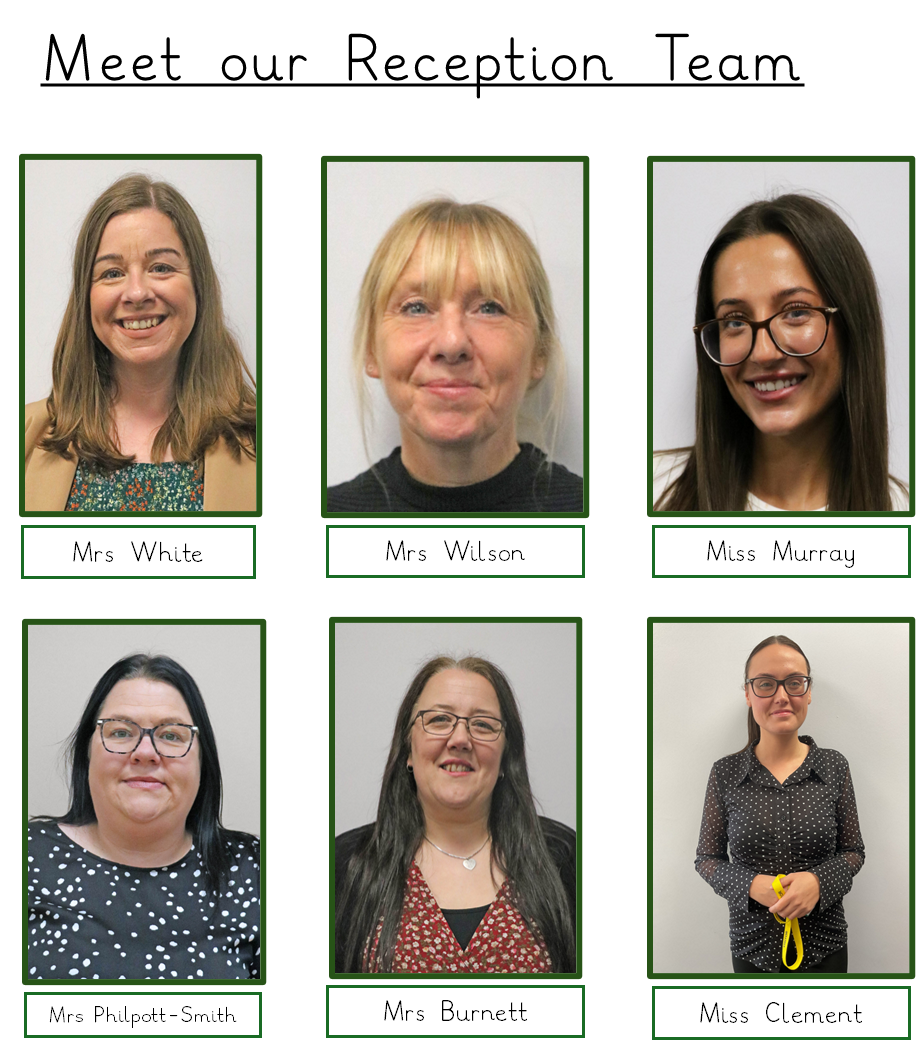
Reception Transition
Once you have accepted your child’s place at Oxclose Primary Academy, you will receive a phone call to confirm your details and then our Early Years Lead will contact your child’s nursery to arrange a visit and speak with their key workers. This helps us to gain a clear understanding of your child’s individual needs, interests and experiences, ensuring a smooth and supportive transition into school.
You will receive a welcome pack in the post containing all of the key information you need to prepare for your child starting Reception. We also offer opportunities for your child to visit the Reception classroom before September, helping them to become familiar with the environment, routines and staff. In addition, we hold a parent welcome meeting where you will be able to meet the team and learn more about school expectations and daily routines.
In September, we provide a graduated transition approach. Children initially attend in smaller groups for shorter sessions before gradually building up to full-time attendance. This carefully planned start supports children to settle confidently, build relationships and feel secure in their new environment.
Further details about the transition process can be found in your welcome pack.
Starting-Reception-Social-Story-2026.pdf
Starting-Reception-Information-for-Parents.pdf
Key Dates and Information 2026 Starters
Parent Welcome Meeting
Tuesday 30th June 2026, 4.00–4.30pm
Parents-Induction-Meeting-2026-NEW-30.06.26-NHS.pdf
Start Date
Wednesday 2nd September 2026 (see welcome pack for graduated transition timings)
Reception Class Visits
You can arrange for your child to visit the Reception classroom on one of the following dates:
- Wednesday 1st July, 9.30–10.30am
- Thursday 2nd July, 1.30–2.30pm
- Wednesday 8th July, 9.30–10.30am
- Thursday 9th July, 1.30–2.30pm
If your child attends Oxclose Nursery, these visits will be arranged by the nursery. If your child attends a private nursery, please select a suitable date and time and contact the school office to book their place.
Consent Forms
Please return completed content forms from your welcome pack to school office by Friday 10th July and show birth certificate.
Uniform
Uniform can be purchased from
Oxclose Primary Academy (New September 2025) | The School Outfit
The School Outfit Unit, 11 Brockwell Road, Crowther Industrial Estate, Washington, NE38 0AF
Opening Hours: Monday - Saturday 9am-5pm Tel: 0191 416 8889
Supporting Your Child Starting in Reception
Preparing for Reception is not just about formal learning, such as reading or counting, but also about helping children to develop the confidence, skills and habits they need to feel happy, secure and ready to learn.
At Oxclose Primary Academy, we recognise the important role parents and carers play in this journey. Simple, everyday moments—such as talking together, playing, reading stories and encouraging independence—help to build the foundations your child needs. These small steps, developed over time, support children to settle into school with confidence and feel a strong sense of belonging.
We are committed to working in partnership with families to ensure every child feels supported from the very beginning. By building on the experiences children already have at home, we can work together to help every child make a confident, happy start to their school journey.
Further Information and Support
You may find the following websites helpful when preparing your child for school:
Helpful Documents
We also recommend the following guides to support your child’s independence and readiness for school:
Preparing for the Move to Year 1
Each year we hold a Transition Meeting for parents of children moving from Reception into Year 1. The meeting provides information about the transition from the Early Years Foundation Stage to the National Curriculum, highlighting the similarities and differences between Reception and Year 1, including classroom routines, learning expectations, homework, reading at home and daily organisation. We talk about the transition arrangements in place, such as visits to the Year 1 classroom, opportunities to introduce Year 1 staff and carefully planned support to help children settle confidently. The session will share information about the Year 1 curriculum, phonics and handwriting programmes, attendance expectations and ways families can support learning at home to ensure a smooth and successful start to the next stage of their child’s education.
This year we are having a meeting on Friday 10th July at 2.45-3.15 to discuss transition from Reception to Year 1. Lucy Bryant from Healthy Heads will also be attending.
Intent
At Oxclose Primary Academy, our Early Years provision is rooted in a nurturing, inclusive ethos where every child is fully included, feels safe, secure and valued as a unique individual. We deliver an ambitious and engaging curriculum that enables children to develop the knowledge and skills needed for both now and the future, removing barriers to learning and promoting equity for all.
Central to our approach is the belief that children are communicators; therefore, speech, language and communication underpin all areas of learning. We place a strong emphasis on oracy, vocabulary development and early reading through a structured and systematic phonics programme (Essential Letters and Sounds), ensuring children become confident and capable readers.
We prioritise the development of personal, social and emotional skills, recognising that these are at the heart of successful learning. Through a balance of high-quality adult-led teaching and carefully planned play opportunities, children are encouraged to develop independence, resilience and confidence, enabling them to take risks and challenge themselves and to develop their executive function skills.
Our curriculum is shaped by children’s interests and enriched through a wide range of meaningful, first-hand experiences that inspire curiosity and a love of learning.
In line with the EYFS Framework, Strong Foundations in the First Years of School and the Reading and Writing Framework, we ensure children build secure foundations across all areas of development.
We are committed to inclusive practice, adopting a total communication approach and providing tailored support for all learners, including those within our Additionally Resourced Provision and those with medical or physical needs. Strong partnerships with families ensure that every child is supported to thrive and succeed throughout their Early Years journey.
Implementation
At Oxclose Primary Academy, the child is at the centre of our curriculum. We provide a rich, enabling environment where open-ended experiences are carefully planned to stimulate curiosity, imagination and independent thinking, allowing children to follow their own pathways in learning. Our provision is underpinned by a plan–do–review approach, supporting children to make choices, reflect on their learning and develop increasing independence and ownership.
We recognise the environment as the ‘third teacher’ and ensure both indoor and outdoor spaces are well-resourced, organised and responsive to children’s interests and developmental stages. Continuous provision and carefully planned provocations are designed to extend learning, promote sustained engagement and foster creativity, critical thinking and problem-solving. Children follow a choose-use-return system allowing them to independently select the resources they need. Resources are organised, labelled and accessible.
Structured daily routines provide a purposeful balance of adult-led teaching and child-initiated play, enabling children to learn through exploration while also receiving explicit teaching of key knowledge and skills.
Exposure to high-quality texts and meaningful themes underpins the curriculum, supporting engagement and enriching children’s experiences. Early reading is prioritised through daily phonics teaching using Essential Letters and Sounds, alongside regular reading practice and opportunities to develop a love of stories.
Mathematics is taught through the White Rose approach, with a focus on practical, hands-on learning to secure deep understanding.
Skilled practitioners play a vital role in modelling, scaffolding and extending children’s learning through high-quality interactions.
Ongoing assessment through observation, Tapestry and regular tracking informs responsive planning, ensuring teaching meets children’s needs and next steps are clearly identified. Early identification of need is prioritised, with targeted support and intervention implemented to ensure all learners, including those with SEND, make strong progress.
A strong focus on communication and language permeates all areas of learning, with adults modelling ambitious vocabulary and promoting high-quality interactions.
Personal, social and emotional development is supported through consistent routines and a relational approach, enabling children to build positive relationships and develop self-regulation.
Strong partnerships with families further enhance learning, ensuring continuity between home and school and supporting every child to thrive.
Impact
The impact of our Early Years provision at Oxclose Primary Academy is reflected in improving outcomes and the development of confident, capable learners.
In 2025, 69% of children achieved a Good Level of Development, demonstrating a positive upward trend in attainment. Children make strong progress from their starting points, particularly in communication and language, where they confidently use an increasingly wide vocabulary within their play and interactions.
Early reading is a clear strength, with children developing secure phonics knowledge through the Essential Letters and Sounds programme. Pupils demonstrate increasing confidence in decoding and blending, supporting their growing fluency and enjoyment of reading. This is further reflected in children’s enthusiasm for books and their ability to apply early literacy skills independently across the provision.
Children display high levels of engagement, independence and resilience, sustaining focus and applying their learning in a range of contexts. They develop a secure understanding of early mathematical concepts through practical exploration and are able to use this knowledge within their play.
Leuven Scale observations show consistently high levels of well-being and involvement, with children demonstrating motivation, curiosity and a positive attitude towards learning.
Personal, social and emotional development is a key strength, with children demonstrating positive behaviour, strong relationships and the ability to regulate their emotions effectively.
As a result, children leave Reception well-prepared for the next stage of their education, both academically and socially.
The impact of the EYFS curriculum is carefully monitored and evaluated through:
- Clear and reliable baseline assessments
- Termly progress and attainment data
- Phonics tracking
- Pupil Progress Meetings
- Pupil and parent voice
- Ongoing observations and monitoring
- Planning and provision scrutiny
- Regular CPD and staff reflection
- Analysis of groups and targeted interventions
Assessment in Early Years
At Oxclose Primary Academy, assessment in Early Years is ongoing, responsive and centred around the unique child. Practitioners carefully observe children within their play and interactions, capturing learning through photographs and videos which are recorded on Tapestry learning journals. In the initial weeks, a ‘Settling In’ observation is completed for each child, focusing on relationships, interests and levels of well-being and involvement. This information is shared with families to ensure a strong understanding of each child as they begin their learning journey.
Throughout the year, parents have access to their child’s online learning journal on Tapestry, enabling them to engage with and contribute to their child’s development. Regular communication supports strong home–school partnerships and ensures consistency in supporting children’s progress.
Assessment is used purposefully to inform teaching and next steps. Practitioners complete termly assessments, which inform personalised next steps and targeted support. In Reception, attainment and progress are also tracked termly using Insight Tracker, enabling staff to monitor development closely and identify any emerging needs. This information feeds directly into Pupil Progress Meetings and intervention planning, ensuring that support is timely and effective.
Baseline assessment is established through the statutory Reception Baseline Assessment within the first half term, alongside practitioner knowledge of the child.
Ongoing assessments include regular phonics tracking (phonics tracker) to monitor progress in early reading and decoding skills, as well as ongoing mathematics assessments to evaluate understanding of key concepts.